
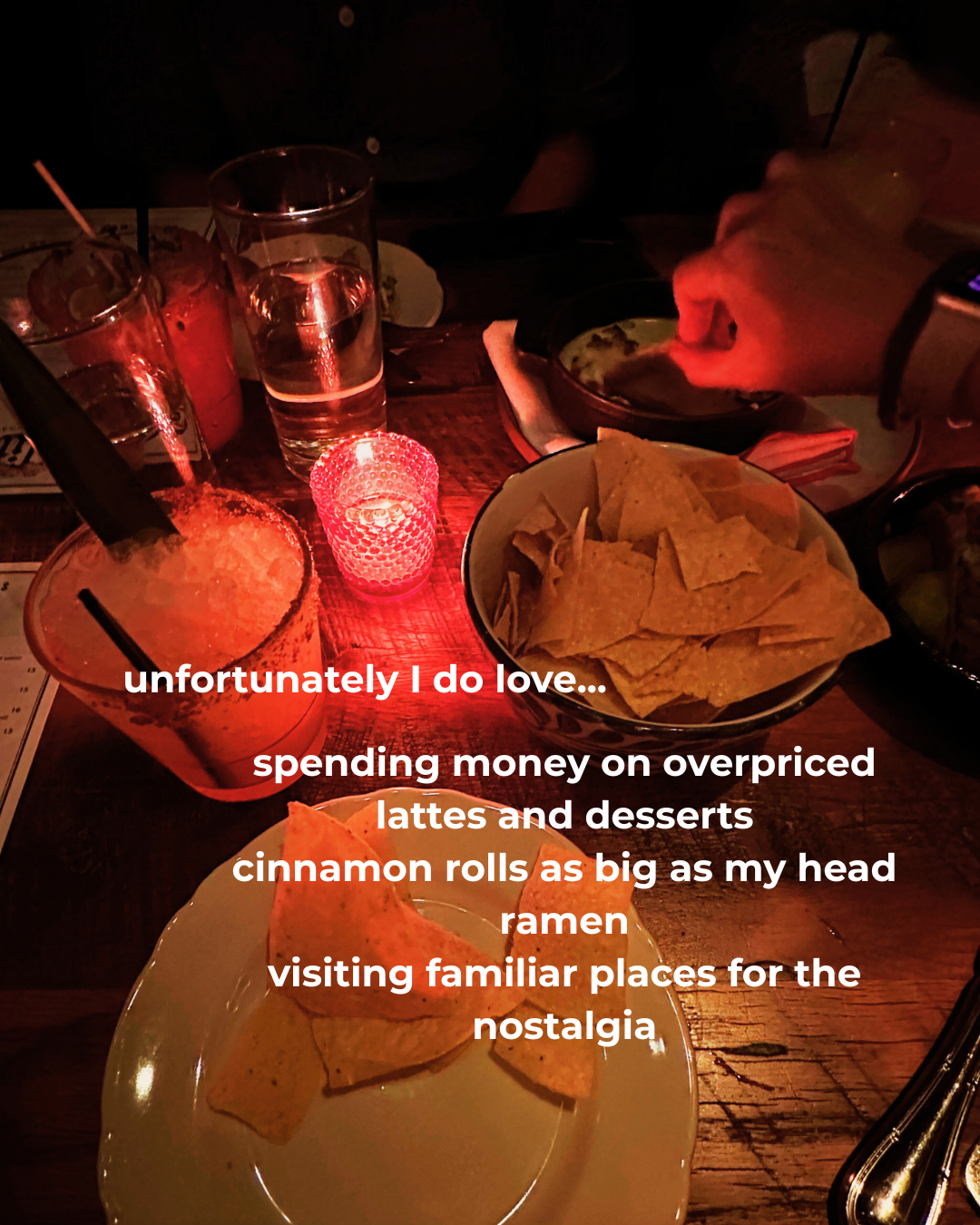
This fall break, ResNavs* used the TikTok trend “unfortunately I do love” to explore the guilty pleasures they enjoy when they have the time. What’s a guilty pleasure? Defined in Oxford Languages, it’s “something, such as a movie, television program, or piece of music, that one enjoys despite feeling that it is not generally held in high regard.” But how does indulging like this make us feel good?
According to an article in Right as Rain, UW Medicine, taking breaks maintains your physical and mental health, calms the nervous system, and promotes both long-term memories and learning.
Where do guilty pleasures come in? Writing in the Literary Hub, Arielle Zibrak says that the “guilty” part comes from associating an action or thing as being beneath you or being less than desirable or attractive. They make the case that, in our culture, the need to produce--to be “productive” or aligned with something seen as “positive”--causes us to feel guilty when we let those things go. It breaks with the “productivity at all costs” scenario.
Of course, our problems and stressors don’t magically disappear after binging Bollywood. Yet, there still may be beneficial effects. In NYT “Guilty Pleasures, No Such Thing,” Dr Kristin Neff, associate professor in the department of Educational Psychology at the University of Texas at Austin, states:
“Having something else to do besides problem solving is really healthy for us,” Dr. Neff said. She described how “flow states,” like meditating, playing sports and, yes, consuming media, can help our brains rest and recover by providing a reprieve from problem-solving mode.
Of course, we also recommend all things in moderation, but go ahead. Take time to enjoy those things that you “unfortunately do love,” Wolverines. And check out the 10/14/25 ResNav Instagram post on @umichcampusinfo.
*Resource Navigtaors, or ResNavs, are a part of the Well-Being Collective; our programs and initiatives align with the mission to make U-M “a better place to live, work, and learn.”