
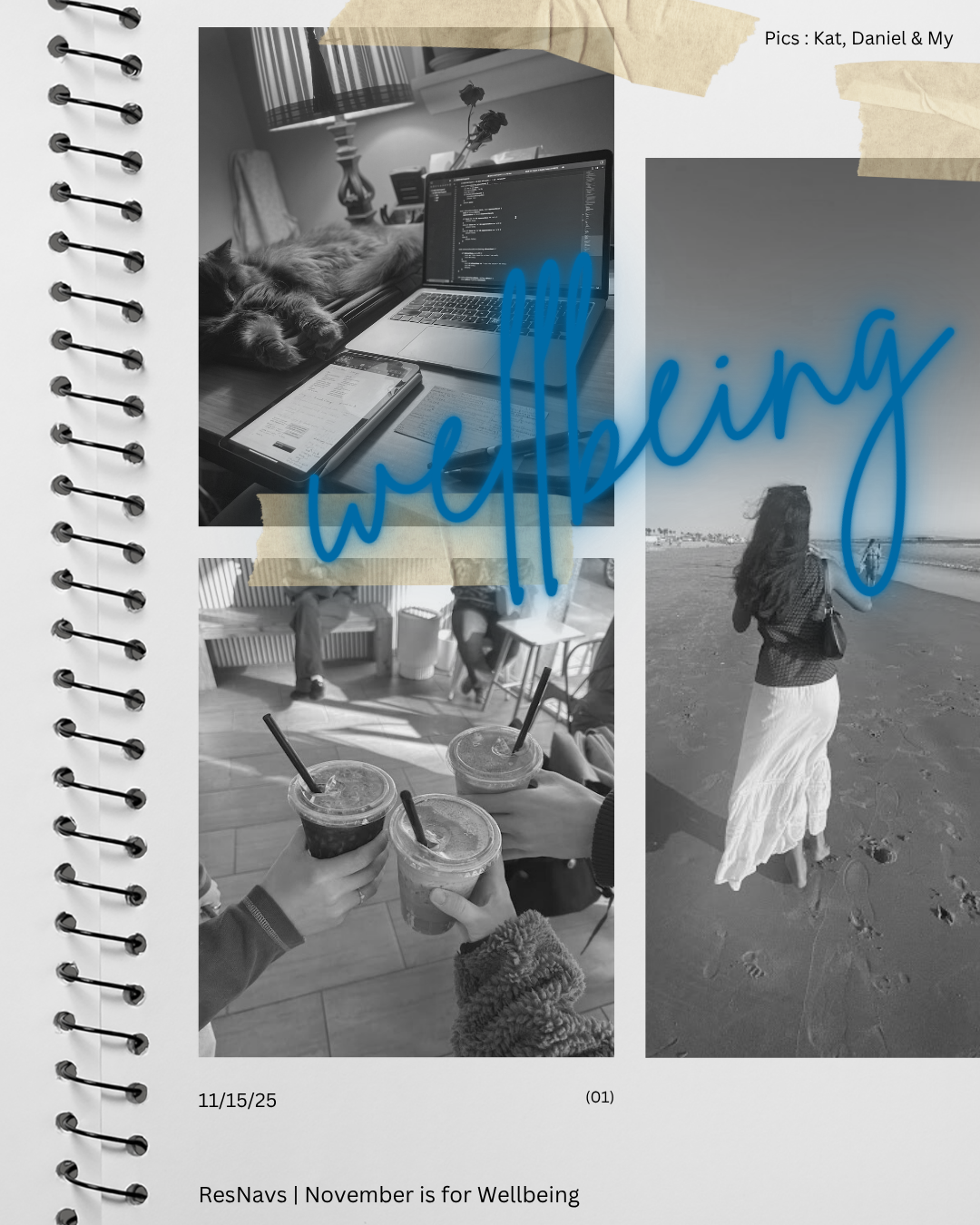
As we head into the end of the fall term, ResNavs get reflective and think about what wellbeing means to them and in what ways the program contributes to U-M students' wellbeing.
Nicole
One of my favorite ResNav initiatives has been the Smile on Your Face (#SoYF) events. These pop-up style programs are simple and fun. Whether it’s handing out snacks, stress-relief themed items, or wellness resources, our events are all about creating moments of connection and care, often during stressful times during the students’ semester. It’s been a great way to interact with students across campus — especially those who may not actively seek out support — to offer them a reminder that they’re not alone and that resources are available to them. ResNavs host these events regularly, and they play a key role in helping students engage with their community and access tools to support their wellbeing.
Beyond the events themselves, we act as connectors--guiding students to campus partners, mental health services, identity-based support spaces, and other resources within the Michigan Well-Being Collective. Through our presence, programming, and outreach, I believe we help foster a more compassionate, inclusive, and wellness-centered campus culture. It’s incredibly rewarding to be part of a system that doesn’t just react to students’ needs, but actively works to create a supportive environment where they can thrive.
My
For specific examples of our wellbeing events, in October we collaborated with the Farm Stand to give out bio-friendly reusable snack bags, promoting both environmental and physical wellbeing. In November, we’re hosting a Gratitude Wall, where students can write messages on leaves and build a community “wall of thankfulness.” It’s a simple but powerful way to celebrate “thanksgiving” and to remind ourselves how much good there is around us. Through these small, themed activities, our ResNav team hopes to help students find easy, everyday ways to take care of themselves and each other.
When it comes to my own mental wellbeing, I try to keep things simple: getting enough sleep, taking walks outside, and noticing when I’m starting to feel burned out so I can take a break. Most importantly, I’ve learned that it really helps to talk about what’s on my mind, whether it’s with friends, family, or the professional counselors on campus. Sometimes we don’t even realize how stressed we are until it becomes too much, leading to burnout and affecting other parts of our lives.
The ResNav program is one of the best places to start when you’re feeling overwhelmed or not sure where to turn. We’re students too, so we understand what it’s like to juggle classes, work, and life all at once. You’re never alone in this journey because ResNavs are here to listen, connect you with the right resources, and remind you that it’s okay to take things one step at a time.
Kat
The majority of students I work with are typically new to campus - freshman, first-year masters, or transfer students - and seeking intervention with finding community and opportunities. The University of Michigan has a lot of people, yet I think it can feel isolating because there is so much going on all the time and it's difficult to navigate when new to this environment. This was definitely my experience. I came from a smaller institution who could know everyone on campus to never seeing the same people everyday and classes were intensified. It was a major adjustment and it did take a mental toll.
As a student employee in Student life, the ResNav team is part of the M-Lead Program and we are focusing on the Vision competency. From what we’ve learned so far, I have started installing practices/perspectives into my personal life, such as personal visioning which I have incorporated to combat burnout or lack of motivation.
I have dedicated a lot of this semester exploring more efficient ways of studying or getting academic tasks done. I have utilized some of the Huberman Lab recommendations for studying and personally doing 30-min increments for studying, with a 5-10 min break in-between. I have noticed I feel more productive and less fatigued, which has also boosted my mental stability.
Additionally, I also removed the majority of social media. I haven’t had Snapchat or TikTok for a couple years now, but I finally removed Instagram. I noticed it led to me procrastinating or not being able to focus because all I wanted to do was be on my phone. It caused a cycle of anxiety and increasing stress as the activity of scrolling was overstimulating for me.
Otherwise, I have utilized the Calm App – free for U-M students – and reading books about my faith. Regulating my emotional wellbeing is an ongoing investment, but it is something I have definitely been more conscious of this semester. I feel as though now I have a better set of skills and resources to aid when I get in ruts of stress.
Justin
Many students come to us with academic concerns that build up throughout the semester, often accompanied by feelings of anxiety or self-doubt. In these moments, we help them recognize that what they’re experiencing may be part of imposter syndrome, you are much better than you would've thought. When students need additional support, we connect them with CAPS or other campus resources that can provide more professional guidance. Besides individual consults, ResNav also holds monthly events like Smile On Your Face (#SoYF) that encourages students to relax and understand the importance of wellbeing. Whether we’re handing out snacks, sharing stress-relief kits, or simply starting friendly conversations, these small moments help students feel connected and remind them that they’re part of a caring community.
For me personally, mental wellbeing can be a part of simple, everyday habits. I open my window in the morning and let the sunlight fill my room with warmth and energy to start the day. After a whole day of work and effort, taking time to step outside and watch the sunset over Ann Arbor always saves my sanity and clears my mind. During Michigan’s long winters, those moments are crucial to keep me grounded. Finally, talking to someone, no matter if it's family or friends, is always helpful. A short conversation can lift my mood and remind me that I am not facing everything alone.
Rocco
One of the priorities of Resource Navigators is to connect people with clubs, student organizations, and other resources that can play a role in contributing to the well-being of students. Often, students come in and aren’t sure how to do things. There are so many different clubs, majors, events, jobs, and other things to choose from. Right from the get-go, I think that providing people with a few choices eliminates some stress from them. On top of that, if that person goes on to take advantage of some of the resources that we’ve provided, then that might further add to their sense of belonging here. This is something that we take pride in.
We provide resources and give students different ways to get involved, which lets us support almost every area of well-being. For example, we help physically by sharing information about workout classes, local gyms, and intramural sports, and we support intellectual growth by connecting students with academic clubs, advisors, and upcoming speakers.
We help in direct ways, too. U-M is filled with resources that assist students in mental well-being. We can direct you or some of the best resources U-M has to offer to get you the help that you need.
There are various tools that I use to manage my wellbeing here. Physically, I use our athletic facilities and have joined a recreational tennis club. Financially, I have utilized campus resources that help with budgeting and planning. Intellectually, I use the advisors that U-M offers, and I check up on pages like Happening at Michigan to find events here that are related to my major. I know that if I need it, I always have resources like CAPS and other services that U-M offers that I can fall back on.
Ruheen
As Resource Navigators, we support student wellbeing by helping peers feel informed, connected, and less overwhelmed. Many students struggle not because resources don’t exist, but because they don’t know where to start. By listening, validating concerns, and connecting students to the right services, we reduce confusion and help them feel more capable of managing challenges. Even small interactions like answering a question or walking someone through a form can relieve stress and build trust. Because wellbeing is both preventative and responsive, we help students form habits of asking for help early rather than waiting until they’re in crisis.
Mental wellbeing, as defined by the Michigan Well-Being Collective, means being able to “manage a range of stressors, thoughts, and emotions in everyday life.” I manage my own well-being through routines that balance structure and rest. Time-blocking my schedule helps me stay grounded, and taking screen-free breaks keeps me from burning out. When I’m drained, I do easy, low-pressure tasks just to get moving again, whether that’s a quick clean-up, a walk, or anything that feels manageable. Studying with friends or talking things out makes the stress feel shared instead of isolating.
Daniel
If you’d asked me a year ago what “mental wellbeing” actually meant, I probably would’ve mumbled something about needing enough sleep and occasionally checking in with friends during finals week. Now, as part of the Michigan Well-Being Collective, my perspective has totally evolved. As a ResNav and someone who’s constantly navigating the ups and downs of being a student, I’ve realized that our contributions go way beyond just sharing campus flyers or reminding people to drink water (though, hey, hydration helps).
One thing I’ve embraced is intentional breaks. I make a point of creating space to step away from the grind whether that’s a matcha break, doodling in a notebook, or just wandering the Diag for 10 minutes without a destination. These small pauses have become my way of re-centering and handling the avalanche of pressure that comes with classes and campus life. I’ve ditched the mindset that working longer is always better, and started giving myself permission to actually stop. Adopting a “work cut-off” time has helped me actually recover, sleep better, and have less brain fog overall.
But what’s made the biggest difference is getting involved with campus resources geared toward wellbeing. The Well-Being Collective isn’t just a fancy buzzword; it’s a massive push to build community, offer accessible programs, and make well-being visible across Michigan. Wolverine Wellness workshops, guided meditation pop-ups, and even quirky things like pop-up “pause booths” encourage us to experiment with self-care, rather than keeping it to ourselves. I’ve also found a lot of comfort in just talking with people like friends, mentors, or even strangers at wellness events. Sharing what works, or what doesn’t, makes mental health less of a solo puzzle and more of a group effort.
Managing mental wellbeing isn’t perfect, it’s a work in progress. But through self-care routines, campus resources, and small acts of kindness, I’ve learned that wellbeing feels a lot less overwhelming when you give yourself permission to pause, reach out, and keep experimenting.
Pranavi
Whether it’s helping someone find mental health support, financial aid, or a student organization that matches their interests, we contribute to the overall wellbeing of campus by making those pathways more visible and accessible. Many students experience stress, isolation, or uncertainty about where to go for help, and ResNavs help bridge that gap by meeting students where they are and normalizing the act of seeking support.
When I think about mental wellbeing, I view it as an ongoing practice of managing stress, emotions, and expectations in a way that feels sustainable. College life can be unpredictable. Assignments pile up, personal issues arise, and it’s easy to fall into burnout. I’ve found that managing my mental wellbeing starts with small, intentional habits. For example, I set aside time each day to take a walk, listen to music, or journal. These moments help me slow down and process what’s on my mind before it becomes overwhelming. I also try to check in with myself regularly instead of waiting until I feel completely drained. Recognizing stress early helps me use healthy coping strategies, like talking things through with friends or reaching out for guidance, rather than pushing through on my own.
On campus, I’ve personally benefited from several resources that align with these strategies. Counseling and Psychological Services (CAPS) has been a helpful place to learn about workshops on stress management and mindfulness. I have also found the University’s Well-Being Collective events like therapy dog sessions and resilience-building activities to be grounding reminders that I’m not alone in how I feel. Even simple things like spending time in the Michigan League between classes or visiting the Maize and Blue Cupboard to make sure I am taking care of my basic needs have made a difference in my overall wellbeing.
Working as a ResNav has shown me how deeply connected wellbeing is to access — not just to resources, but to a sense of belonging and understanding. By helping other students navigate the maze of campus opportunities, I’ve realized that wellbeing isn’t just about managing stress individually; it’s about feeling supported by a community that values care and connection. When we help others find what they need whether that’s academic support, a counseling appointment, or a club that feels like home we are contributing to a healthier, more resilient student body. That’s the heart of what the Michigan Well-Being Collective stands for, and it’s what makes our work as ResNavs so meaningful.